Reflections of a dev on AI
Written by: Randy MS
Date: 8/2/2026
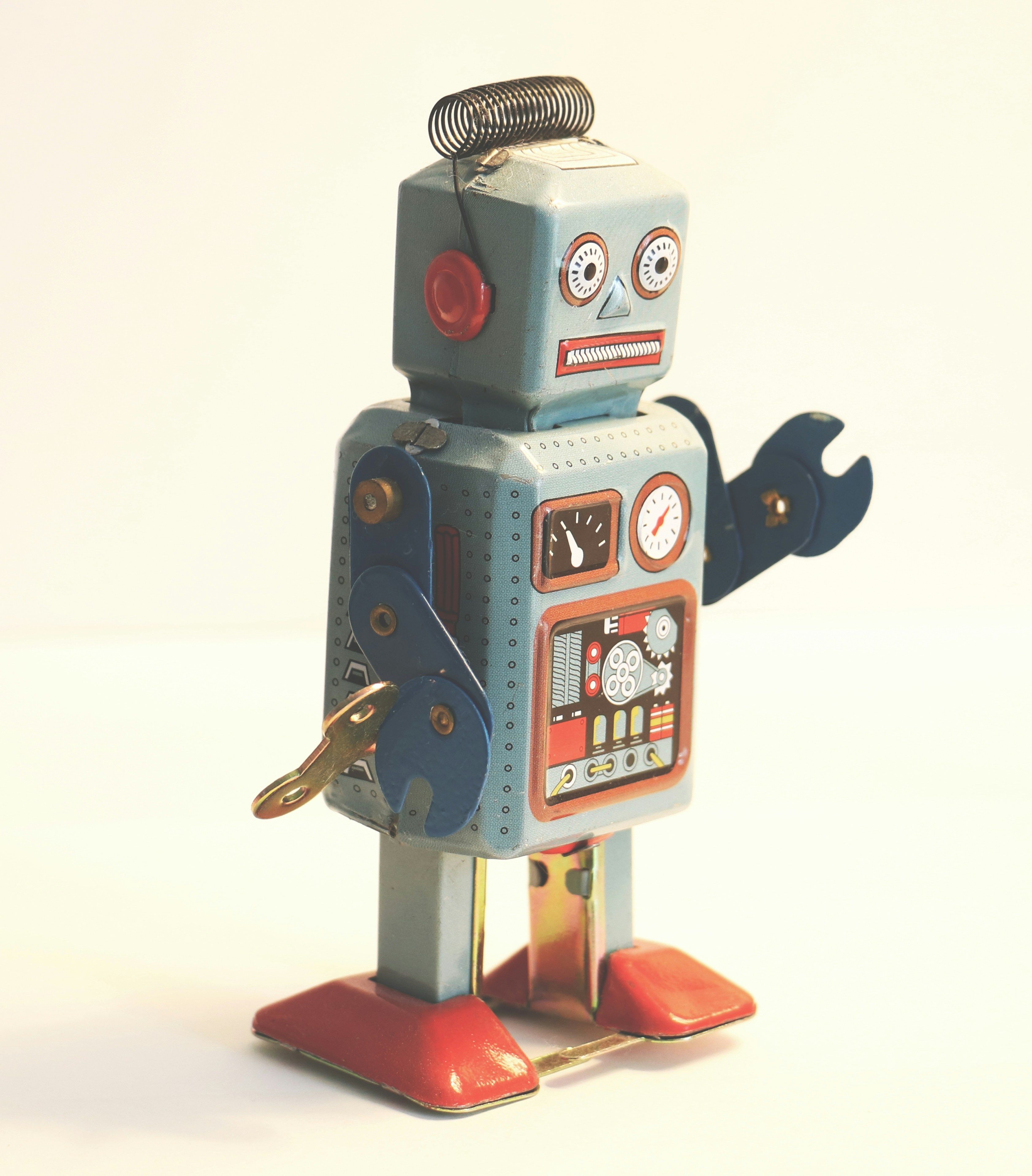
📸 Image: Thanks to Emilipothèse for the robot image above!
A few days ago, a close friend asked me what would have happened if we had had access to the artificial intelligence tools we have today during our early years at university. He confidently argued that we would have finished our degrees in record time and achieved the highest possible grades. I don’t necessarily disagree. I believe that the use of artificial intelligence in academic settings can significantly enhance results and dramatically increase the speed at which assignments are completed.
However, an inevitable question arises: where does learning fit into all of this?
I want to reflect on this topic based on my own experience. It has been just over a year since I began using artificial intelligence both personally—whether for leisure or learning—and professionally. Without going into too many technical details (I hope to write a purely technical article about the tools I’ve used in the future), my use of artificial intelligence has mainly focused on research, comparing results, exploring capabilities, and, above all, learning.
I initially started using ChatGPT in its free version. Once I realized that I could use it consistently and obtain valuable results, I decided to upgrade to the paid version, where I gained access to more intelligent, more capable, and faster agents. I began using this tool to support my research and learning in technology—precisely in the context of this blog and this website.
My goal was to understand code, grasp technological mechanisms, and explore different domains and areas where I could reach conclusions more easily. At one point, I even stopped using Google searches almost entirely and focused nearly all my queries directly on ChatGPT. It became rare to see Google, Stack Overflow, or other well-known developer tools in my browsing history.
Later on, my workplace enabled an initial artificial intelligence tool that we used for several months. On a personal level, I decided to dig deeper—learning how to use it better and experimenting with different types of tests. Eventually, developers were encouraged to use this tool more intensively, and not long ago we transitioned to a more advanced learning tool with a broader scope, designed for large-scale projects. The results have been, quite honestly, astonishing.
Not only because of the speed, but also because of its ability to provide well-contextualized answers and to understand large projects without needing step-by-step explanations—provided the right context is given. When discussing how to use this tool within my team, interesting questions often emerged:
- Is this really the best answer?
- How do I know which answer is the best?
- How do I know I’m using the tool appropriately?
This is where I see a connection between my friend’s initial question and the concerns raised by my colleagues at work. For me, the answer is clear: maturity.
Today, I use artificial intelligence purely as an assistant. In a very conscious and honest way, I see it as a tool that supports my tasks and helps me complete them more efficiently—not as a replacement for my own thinking. The maturity that comes from using artificial intelligence for over a year has taught me how to truly get the most out of it. And I’m not referring to prompt engineering, but rather to how I use it, the context in which I apply it, and what I aim to achieve through it.
In my case, artificial intelligence has become a learning tool. At the beginning, I used it to get immediate answers and solve problems directly. Today, I use it to understand the problem itself, to analyze the solutions it proposes, and to build my own answers from there.
That is why I believe the key lies in the maturity with which this technology is approached and used. No matter how fast technology evolves, that maturity cannot be replaced.
This reminds me of the 2003 film I, Robot. In an interrogation scene, Detective Spooner, played by Will Smith, asks Sonny—the robot portrayed by Alan Tudyk—whether he is capable of composing a symphony like Beethoven’s Ninth. The robot answers yes. Then comes the implied question: can a human do the same?
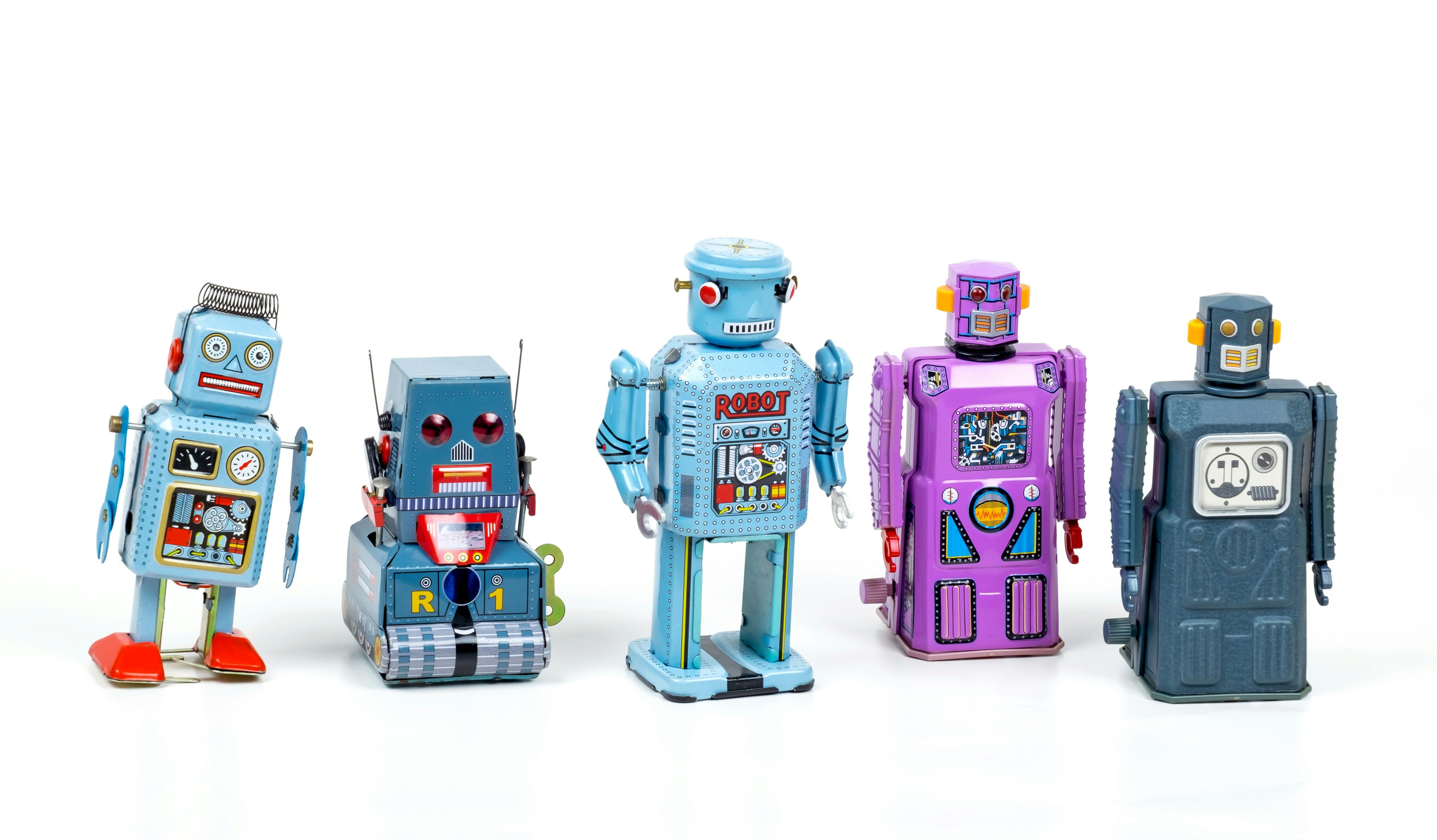
📸 Image: Thanks to Eric Krull for the robots image above!
The meaning I take from that scene is that human beings can see beyond the output. We can give context, meaning, value, and purpose. While machines and artificial intelligence can produce results at incredible speed and efficiency, deep analysis, emotion, vision, and purpose remain uniquely human traits.
This is something I often shared with my teammates at work. This is where a developer’s level of seniority truly shines. Artificial intelligence can easily replace many tasks, yes—but those who can analyze, truly understand what is happening, adapt responses to the real context of a project, and align solutions with the final goal are the ones who stand out. That capability comes only with experience.
Artificial intelligence may provide the best possible answer, but knowing how to integrate it, how to give it meaning, creativity, and a human touch is, in my view, something exclusively human.
I have never felt afraid of being replaced by artificial intelligence. On the contrary, I’ve felt deeply motivated to learn. Not out of fear that the wave will drown me, but out of a desire to learn how to ride it, how to move with it. That motivation has pushed me to research on my own and grow professionally.
That is my personal conclusion. For students who are just starting out, it is very likely they will use artificial intelligence tools to obtain quick results. Over time, experience will bring the maturity needed to use them properly. In my case, after several years of study and already being in the workforce, integrating these tools into my daily routine took about a year.
It is possible that students who are just beginning today will reach that maturity more quickly. Ultimately, the goal is not to avoid artificial intelligence, but to learn how to use it with judgment. That is my personal perspective, and this is the reflection I wanted to share.